The other day I forced myself to change into Real Clothes (not PJs), comb my hair, and put on lipstick so that I could continue with my Pandemic Productions: this time making an "author readaloud" of my historical novel for young readers, The Riddle of Penncroft Farm.
(Note: there is a free teaching guide available for this book. I have posted it on my website, on the "For Teachers" page. Here's the link: www.dorotheajensen.com.)
Here is the first part of the first chapter: enjoy!
If this video does not play on your device, use this Vimeo link to watch it directly: https://vimeo.com/403260879.

Dorothea Jensen, Author
Saturday, April 11, 2020

Pandemic Productions: A Buss from Lafayette, Chapter 1
As I mentioned in my last post, I'm as trapped by this pandemic as the rest of the world. I've decided to create readaloud vids of my books for parents and or tele-teachers to use these during this extraordinarily challenging time. Or just to enjoy.
Here is the first chapter of my historical novel for middle graders, young adults, and older: A Buss from Lafayette.
(Note: this book starts with a diary entry: Tuesday, June 21, 1825, which is also posted on my websites: www.dorotheajensen.com and www.abussfromlafayette.com.)
For anyone who would like to help their students/kids understand the historical bits of this book, you might want to take a look at A Buss from Lafayette Teacher's Guide, available as both paperback and e-book. This guide contains bulletin board ideas, vocabulary exercises, varied student handouts, puzzles, games, reading comprehension quizzes, discussion questions, and both individual and class projects. Its cross-curricular activities include language arts/reading, social studies, mathematics, health/safety, art, music, dance, drama, recipes, and suggestions for real and virtual field trips. A full answer key is provided. The main topics covered are the American Revolution, Lafayette's role in our War of Independence, Lafayette's Farewell Tour of America in 1824-5, and everyday life and customs in rural America in the 1820s.
Here are a couple of buy links for the guide: Amazon, Barnes & Noble, etc.
Anyway, enjoy the story!
If this video does not play on your device, here is the Vimeo link to watch it directly: https://vimeo.com/403255999
Sunday, March 29, 2020
Readaloud to Help Make the Quarantine Go By A Bit Faster
The Society of Children's Book Writers and Illustrators suggested that we members do readings of our works online during this difficult quarentine.
I'll start doing live readings on Facebook, when I figure out how!
Wednesday, March 18, 2020
Happy Stamp Act Repeal Day! Part 2

The colonial assemblies also lost no time in reflecting the angry reaction of the American people to the Stamp Act. By the end of May, the Virginia House of Burgesses (inflamed by speeches by Patrick Henry, who carefully waited to take the floor until most of the more conservative assemblymen had gone home) passed a series of “Resolves” stating their objections to the Act, even though some members thought this came very close to treason. Other assemblies soon followed suit, including Massachusetts, which took the further step of calling for an intercolonial meeting to denounce the infamous act - the Stamp Act Congress. (Congress means a “coming together”.)
It was not only the newspaper publishers and the legislators who acted upon their dislike of the Stamp Act, however. Mobs of ordinary people vented their anger upon the physical embodiment of the law - the men unfortunate enough to have accepted appointments as royal stamp agents. Instead of gaining a welcome British payment for selling stamps, many a collector had the unnerving experience of seeing a rough doll labeled with his own name being hanged and set afire. Worse yet, the real bodies of some agents were stripped naked, covered with boiling tar, rolled in feathers, and ridden on a rail. This bizarre torture was no laughing matter and before long, virtually all the stamp agents resigned their posts.
In October of 1765, the Stamp Act Congress called for by Massachusetts convened in New York. It was the first meeting with representatives from most of the colonies. They drew up a petition to the King and Parliament stating that the Stamp Act violated their rights as Englishmen because it constituted taxation without representation, and urged its repeal. Their resentment at being treated like this was echoed in The Boston Evening Post:
We have an old Mother that peevish is grown,
She snubs us like Children that scarce walk alone;
She forgets we're grown up and have Sense of our own.
But it took more than a lack of stamp sellers and a petition or even a poem to defeat the Stamp Act - it took a widespread boycott (although that's not what it was called at the time). Beginning with New York and soon spreading to other cities, people started signing agreements that no British products would be bought until the Stamp Act was revoked. The non-importation agreements did the trick. Soon British merchants were complaining loudly to their government about their lost American profits. This British protest provided George III a way to give in without losing face . In March of 1766 the Stamp Act was repealed.
The colonists were ecstatic at this apparent victory. The boycott was swiftly ended; toasts were drunk to the King, and city windows were “illuminated” by lit candles as a mark of celebration. Few of the rejoicing colonists noticed there was a worm in the apple. Along with the repeal of the hated Stamp Act, the British government slipped in a “Declaratory Act”. It was straightforward enough: the Act simply declared that Parliament had authority over the colonies in all cases and could impose revenue taxes any time it wanted to. It wasn't long before that's exactly what Parliament did.
Happy Stamp Act Repeal Day! Part 1
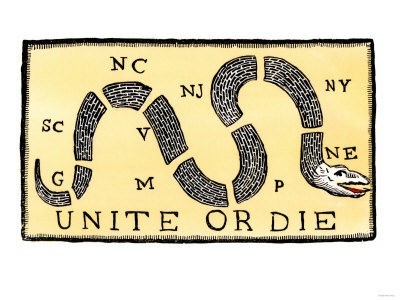
I thought this might be a good place to post what I wrote about this many years ago in a mansucript I called The American Revolutions, By a Partial, Prejudiced, and Ignorant Historian:
When it became apparent that the Sugar Act (the last bright idea that failed) was going to reap more resentment than revenue from the colonies, George III brought in a replacement for [Prime Minister] Grenville: the Marquis of Rockingham. This new minister looked at the upheaval caused by taxing imports into the colonies, and decided that there was a better way. The idea Rockingham came up with was based on a very simple idea - a stamp on paper goods. (This was embossed on the paper concerned by means of a metal stamping device, rather like a notary stamp.)
The Prime Minister, with the help of the King’s majority, ushered a new law through Parliament called the Stamp Act which required all colonial legal documents (such as wills, wedding licenses, indentures and contracts) and all commercial papers (such as almanacs, newspapers, and pamphlets), and even playing cards to be stamped in order to be legal.
Rockingham’s requirement really rocked the boat. For the first time, the daily life of nearly every colonist was to be directly affected by an Act of Parliament. Every time anybody wanted to get married or sell a cow or lease a cottage - that person was supposed to track down the stamp agent and buy a stamp to show he had paid to make the transaction legal. Thus, it was not only the prospective cost of the stamps which irritated people, but, in modern terms, the fact that they would make many everyday activities a hassle and continually remind the colonists that they were contributing to British coffers. Unfortunately for Rockingham’s plan, some of the people most affected were those who published newspapers and pamphlets, who would have had to buy a stamp for every copy of their publications before they could be sold. These people, however, were in an excellent position to let everybody know what they thought of the Stamp Act. In print, they took careful aim at the Stamp Act and the political issues it represented.
Friday, February 7, 2020
OK,OK: It's not every day I quote Aristotle.
I came across the following quote in Proud Destiny, by Feuchtwanger. It is a historical novel about Beaumarchais, the playwright who wrote "The Marriage of Figaro," and who engineered the early French support of the American Revolution.
The artistic representation of history is a more scientific and serious pursuit than the exact writing of history. For the art of letters goes to the heart of things, whereas the factual report merely collocates details. —Aristotle
I believe that this can be read as an explanation of the value of historical fiction.
I love it.
Some might think that writing a fictional story set in the past is easier than just plain writing about the past.
Wrong.
We historical novelists must actually do BOTH.
And if you think it is easy to put words into the mouths of historical figures, think again. What you write must be plausible, historically accurate, and appropriate to the person speaking.
In the following excerpt, I had to pack in indications that Lafayette was 1) charming, 2) often joked about himself, 3) spoke slowly and deliberately in English when he visited America in his late 60s, 4) really did have a problem getting rid of the hundreds and hundreds of flowers given to him on his Farewell Tour.
The following is a description of what happens when my fictional heroine, Clara, meets the non-fictional personage, General Lafayette.
* * *
Keeping my eyes pinned to the gentleman’s face, I picked up my pocket and pulled out the fan. Snapping it open, I looked closely at it to compare the portrait printed there with the features I saw before me. “Why, y-y-you are . . .” I stuttered.
The gentleman glanced at the fan in my hand. “Oui, I am the one whose picture you hold in your hand. These pictures! They are everywhere I go! I see almost as many of them as I do roses. And they are always of my poor self as I look today, not the slender and graceful youth I was then.” He shrugged. “Oh, well, one must accept these things.”
—A Buss from Lafayette © 2016 Dorothea Jensen
I'm not sure if this "goes to the heart of things," but I am quite sure it will grab the interest of reluctant readers much more effectively than a "collocation of details" in a history textbook!
Dorothea
The artistic representation of history is a more scientific and serious pursuit than the exact writing of history. For the art of letters goes to the heart of things, whereas the factual report merely collocates details. —Aristotle
I believe that this can be read as an explanation of the value of historical fiction.
I love it.
Some might think that writing a fictional story set in the past is easier than just plain writing about the past.
Wrong.
We historical novelists must actually do BOTH.
And if you think it is easy to put words into the mouths of historical figures, think again. What you write must be plausible, historically accurate, and appropriate to the person speaking.
In the following excerpt, I had to pack in indications that Lafayette was 1) charming, 2) often joked about himself, 3) spoke slowly and deliberately in English when he visited America in his late 60s, 4) really did have a problem getting rid of the hundreds and hundreds of flowers given to him on his Farewell Tour.
The following is a description of what happens when my fictional heroine, Clara, meets the non-fictional personage, General Lafayette.
* * *
Just then, I saw a gentleman climb down from the
carriage and walk towards me.
He was a tall man, broad-shouldered, with short brown hair and large, expressive eyes. He was dressed simply in tan nankeen pants and a blue broadcloth coat with gilt buttons. As he walked towards me, he leaned upon a cane. Despite his beak of a nose, his was a most pleasing face. It was a face that was strangely familiar—and a tiny bit chubby.
He was a tall man, broad-shouldered, with short brown hair and large, expressive eyes. He was dressed simply in tan nankeen pants and a blue broadcloth coat with gilt buttons. As he walked towards me, he leaned upon a cane. Despite his beak of a nose, his was a most pleasing face. It was a face that was strangely familiar—and a tiny bit chubby.
“Sir?” I called, covered in confusion as much as I
was in brook water. “Why are they throwing these
roses away?”
He laughed. “It is a bit of a guilty secret, mademoiselle.” His words were slow and deliberate. “You see, everywhere I go, people keep giving me roses, roses, and more roses! Whatever I ride in— be it barouche, or curricle, or coach—it is filled to overflowing with them! Because of this, every once in a while I must tell the small lie—that I must make the stop that is necessary—and that I need my privacy. Then I find a secluded nook like this and we cast out all the pretty flowers. Please do not tell anyone. I beg of you.”
He laughed. “It is a bit of a guilty secret, mademoiselle.” His words were slow and deliberate. “You see, everywhere I go, people keep giving me roses, roses, and more roses! Whatever I ride in— be it barouche, or curricle, or coach—it is filled to overflowing with them! Because of this, every once in a while I must tell the small lie—that I must make the stop that is necessary—and that I need my privacy. Then I find a secluded nook like this and we cast out all the pretty flowers. Please do not tell anyone. I beg of you.”
Keeping my eyes pinned to the gentleman’s face, I picked up my pocket and pulled out the fan. Snapping it open, I looked closely at it to compare the portrait printed there with the features I saw before me. “Why, y-y-you are . . .” I stuttered.
The gentleman glanced at the fan in my hand. “Oui, I am the one whose picture you hold in your hand. These pictures! They are everywhere I go! I see almost as many of them as I do roses. And they are always of my poor self as I look today, not the slender and graceful youth I was then.” He shrugged. “Oh, well, one must accept these things.”
—A Buss from Lafayette © 2016 Dorothea Jensen
I'm not sure if this "goes to the heart of things," but I am quite sure it will grab the interest of reluctant readers much more effectively than a "collocation of details" in a history textbook!
Dorothea
Monday, December 16, 2019
Subscribe to:
Posts (Atom)